Touken Ranbu: 130 Sword Characters, 1,500+ Transparent PNGs
Touken Ranbu Character Art: 130 Personified Japanese Swords
 Edit
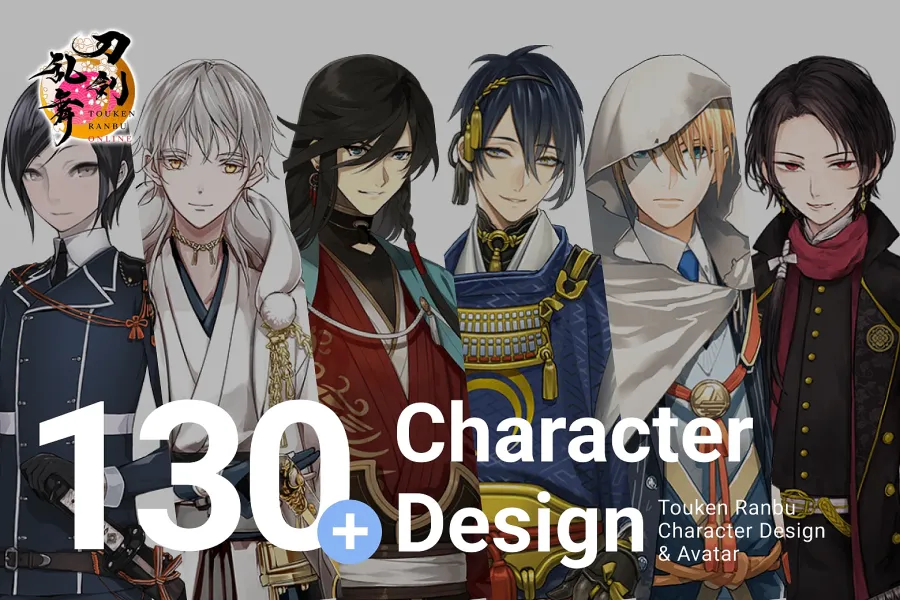
1,558 transparent PNGs of 130 Touken Ranbu sword warriors, with battle, damaged, and alternate outfits. For drawing reference only, no commercial use.

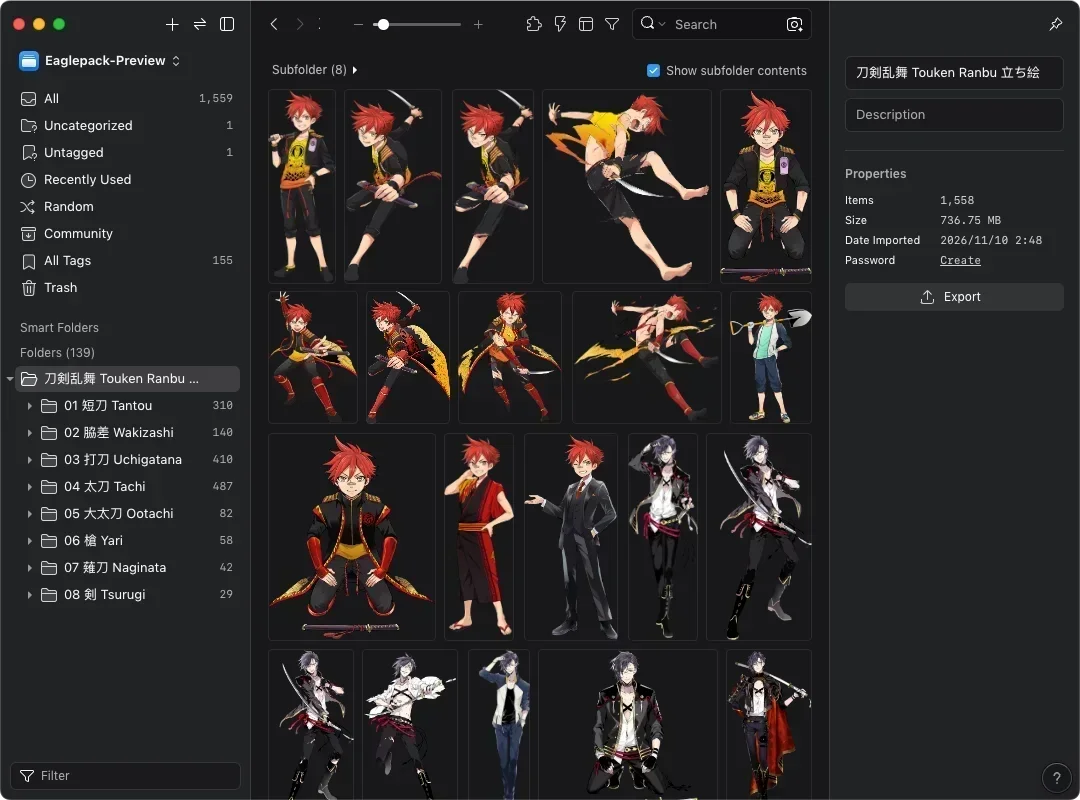
This eaglepack brings together 1,558 character illustrations of the 130 sword warriors in Touken Ranbu Online, all as transparent PNGs. The artwork is copyrighted by NITRO PLUS and EXNOA and is for drawing reference only, not for commercial use. The images come from the character galleries on the English Touken Ranbu wiki (touken-ranbu.fandom.com). They're organized into two levels of folders, by sword type and then by character, and tagged in Japanese by pose and outfit. Download the pack, import it into Eagle, and click any tag to filter.
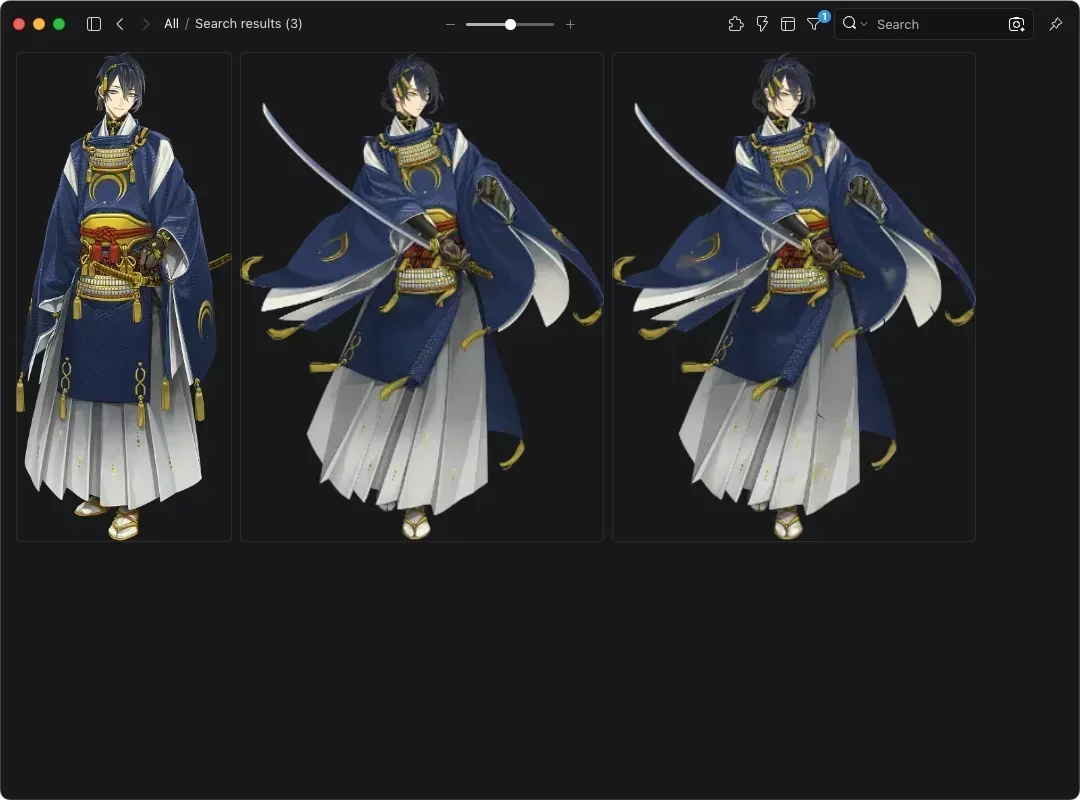
Each sword warrior has several illustrations in the game: a standard pose, a battle pose, a damaged version with dirt and torn clothing, plus kiwame, an upgraded outfit after training, and keisou, a casual outfit. If you want to draw Mikazuki Munechika and can only find one promo image, this pack lines up all 14 of his illustrations for comparison.
What Is Touken Ranbu?
Touken Ranbu Online is a game by DMM GAMES (now EXNOA) and Nitroplus, launched in January 2015. It turns famous swords from Japanese history into young men called touken danshi, or sword warriors, and the player leads them into battle. Different illustrators designed different characters.
How Sword History Shapes the Character Designs
Many details in these designs come from the real sword's name, legend, or former owner. Open a character's folder and you can find the clues in the art itself:
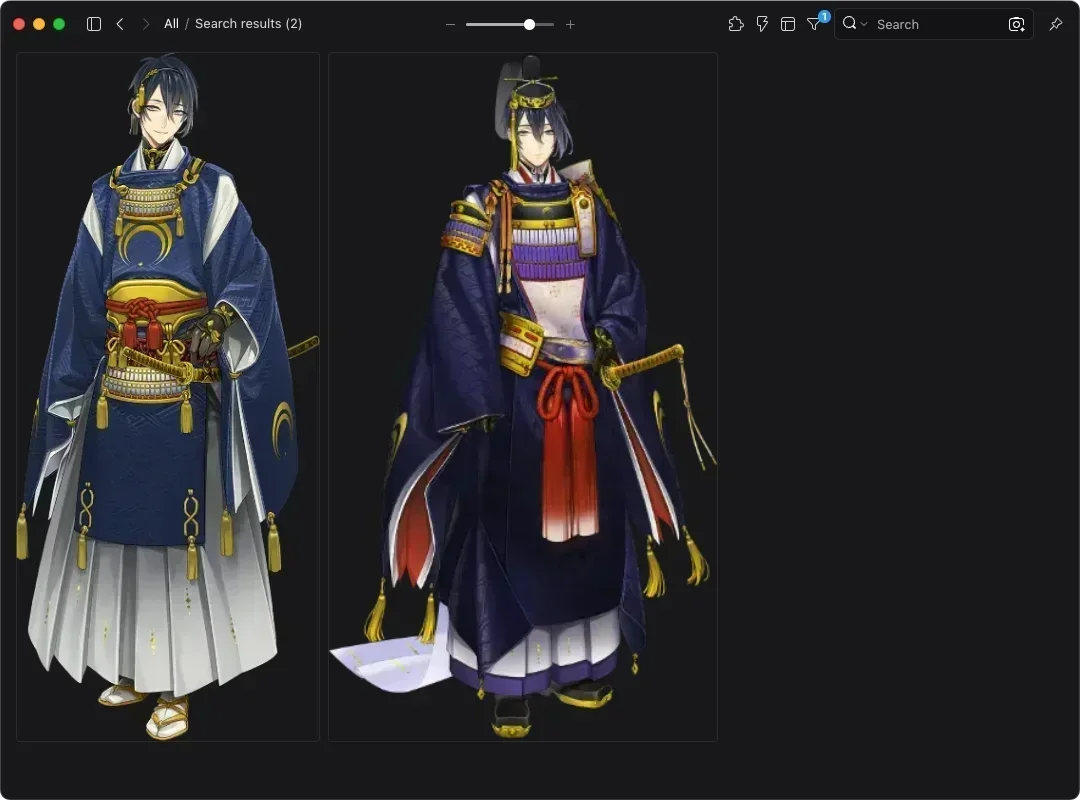
- Mikazuki Munechika, a name drawn into the eyes. The blade has crescent-shaped marks in its temper line, which is where the name "Mikazuki" (crescent moon) comes from. The illustrator, Sata, put those crescents in his eyes. Zoom in on his standard illustration in Eagle and you'll see them.
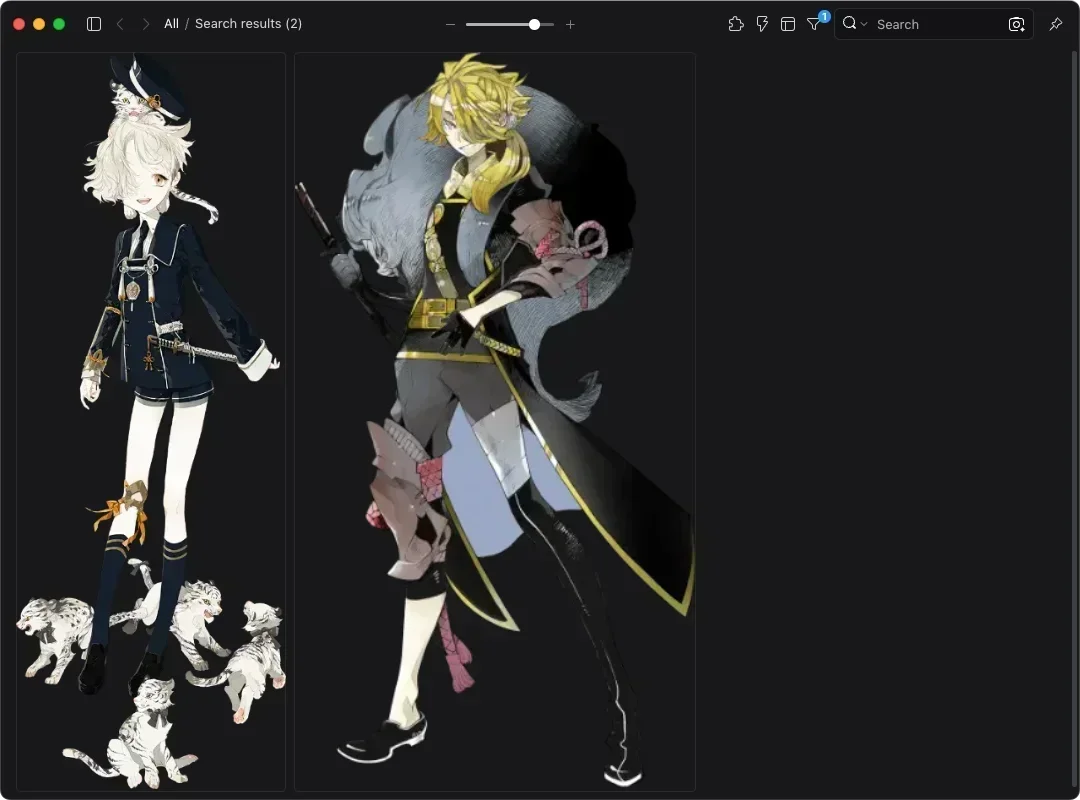
- Gokotai, a legend turned into companions. Legend says this Uesugi family dagger drove off five tigers, so five white tiger cubs follow him, one on his hat and four at his feet.
- Shishiou, a defeated monster worn as a pelt. The sword is said to have been a reward to Minamoto no Yorimasa for slaying the nue, a chimera from Japanese folklore. The fur he wears is the nue.
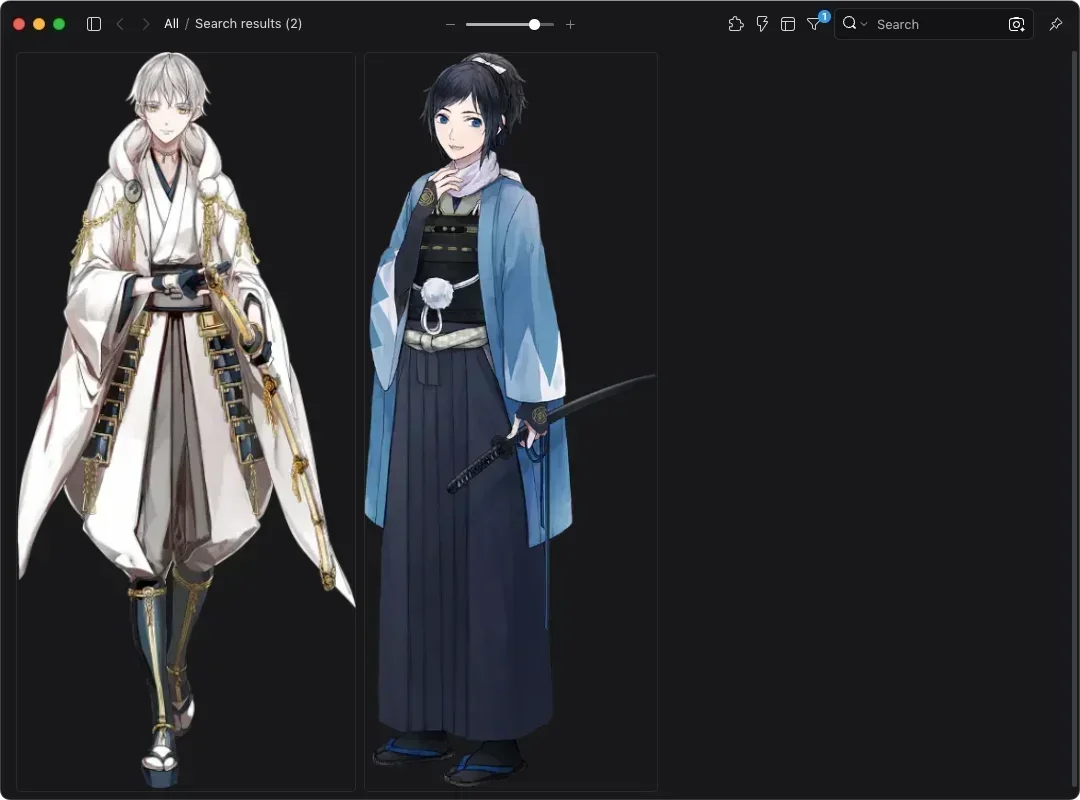
- Yamatonokami Yasusada, a costume that names the former owner. This sword belonged to Okita Souji of the Shinsengumi, so he wears the group's famous light blue haori with white sawtooth trim, and his crest comes from the Okita family.
- Tsurumaru Kuninaga, a color that matches the name. Tsuru means crane, and he dresses all in white. One of his lines jokes that his white clothes will look more like a crane's once they're stained red in battle.
You can apply the same idea to a brand mascot or an original character. A name can become a small motif, a story can become an accessory or a companion, and an origin can show up in the costume and colors.
From Game to Real Life: Swords and Spin-offs
As the game grew, many players started visiting museums to see the real swords, and sword-related fundraisers found a new base of supporters. The large sword Hotarumaru went missing after World War II. In late 2015, swordsmiths in Seki, Gifu, launched a crowdfunding campaign to forge a new one. They aimed for 5.5 million yen and raised about 45 million from 3,193 backers, and the new sword was dedicated to Aso Shrine in 2017. In Ashikaga, Tochigi, the city exhibited Yamanbagiri Kunihiro in 2017 alongside official game merchandise. In 2023 it raised funds through crowdfunding and Japan's hometown tax donation program, and in 2024 the city's cultural foundation acquired the sword, an Important Cultural Property. A commemorative exhibition drew more than 40,000 visitors.
The game has also spun off into other media. Musicals and stage plays began in 2015, the anime Touken Ranbu: Hanamaru aired in 2016, and in 2018 the musical's cast performed on NHK's New Year's Eve show, Kohaku Uta Gassen.
What Makes This Pack Useful
- Several poses per character: standard, battle, damaged, special attack, chores, anniversary
- Newer outfits included: kiwame, casual, and 10th anniversary
- Two folder levels plus Japanese tags for filtering
What's in the Pack
The pack contains 1,558 PNGs in 8 folders, one for each sword type: tantou, wakizashi, uchigatana, tachi, ootachi, yari, naginata, and tsurugi. Inside each are character folders named in both Japanese and English, such as "三日月宗近 Mikazuki Munechika". Search a character's name in Eagle to see all of their illustrations.
The tags use the game's Japanese terms and fall into three groups: sword type, pose (such as 通常 for standard and 中傷 for damaged), and outfit (such as 極 for kiwame and 軽装 for casual). Click 中傷 to see the damaged illustration of every character at once.
Can You Use Touken Ranbu Art Commercially?
No. The artwork is copyrighted by NITRO PLUS and EXNOA, and this pack is for drawing reference only. You can't use it for any commercial purpose, and every image's notes field says so.
Drawing reference means studying and practicing from the art. For example, put Mikazuki Munechika's standard and battle illustrations side by side and study how the wide sleeves and hem of his robe swing open when he draws his sword. Then use that sense of fabric movement in a character of your own.
How Can You Use These Illustrations as Reference?
This pack is most useful for three groups: illustrators practicing character art, cosplayers who need to recreate costume details, and designers studying character design.
Drawing Characters: One Outfit, Several States
A character's standard, battle, and damaged illustrations all show the same outfit. What changes is the pose and the wear. The standard art is usually a still pose, while the battle art shows a swing or a lunge, with sleeves, hems, and cords flying out. The damage varies by character. Mikazuki Munechika only picks up a little dirt, while others have clearly torn clothes. When you practice folds and movement, comparing the standard and battle art teaches you more about how fabric moves than a single front view.
Cosplay: Seeing Every Costume Detail
To recreate a character, cosplayers need to see accessories, buttons, and knots clearly. The illustrations are sharp enough to zoom in on in Eagle, down to embroidery patterns and accessory shapes. Each character's standard, kiwame, casual, and 10th anniversary outfits sit in one folder, so you can open the outfit you're making and compare without hunting across different sites.
Character Design: A Unified Look for One Sword School
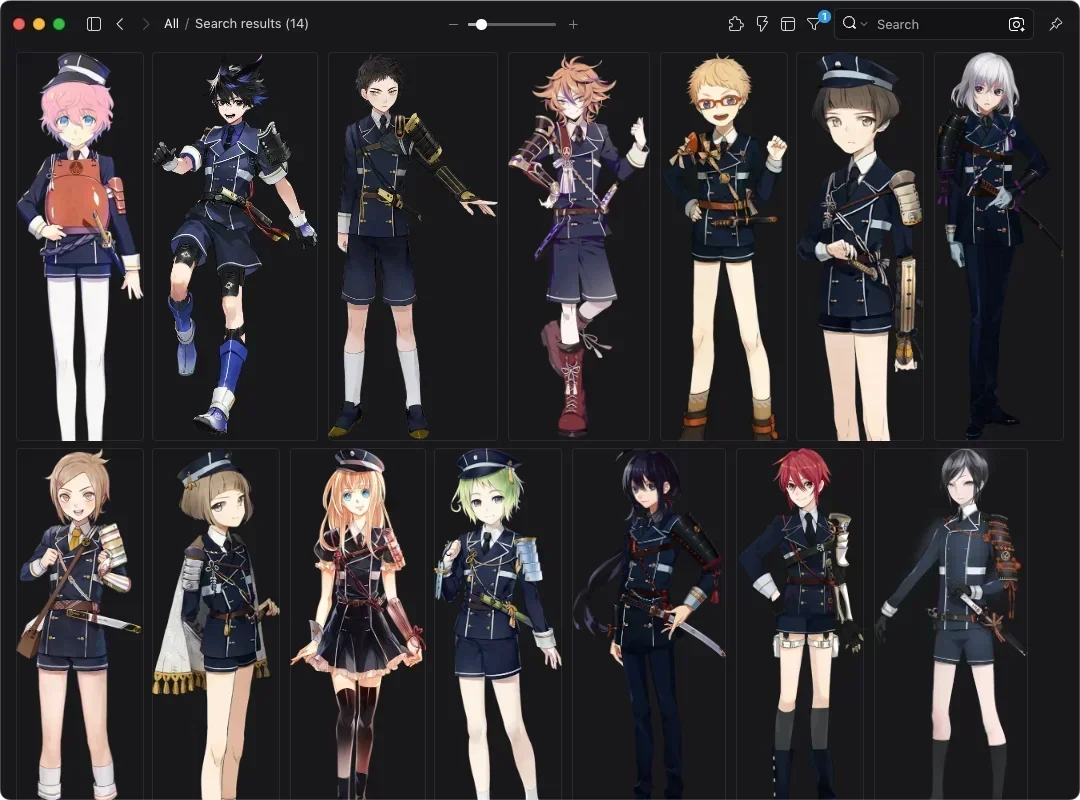
The 14 swords with "Toushirou" in their names are brothers from the same school of swordsmiths. Line up their standard illustrations and you'll see they all wear navy military-style uniforms with white piping. The daggers wear shorts, and the two wakizashi, Honebami and Namazuo, wear long pants. Hair color, hats, armor, and small accessories set each one apart, and Midare Toushirou swaps his shorts for a skirt.
If you design a character lineup, a family of brand mascots, or a faction in a game, you face the same problem: they need to look like a group, but each one has to be recognizable at a glance. The Toushirou brothers show one way to solve it: fix a base uniform, then change just a few elements per character.
Character Upgrades: Before and After Kiwame
Ninety of the characters have a kiwame version, the upgraded form they take after returning from training. Put a character's standard and kiwame art side by side to see what was kept and what was replaced. Mikazuki Munechika's kiwame keeps the deep blue base and the crescent motif, then adds a tall hat, red braided cords, and more layers to his robes. If you design character evolutions or class changes in a game, or redesign an existing character, this is a useful model for keeping a character recognizable while showing growth.